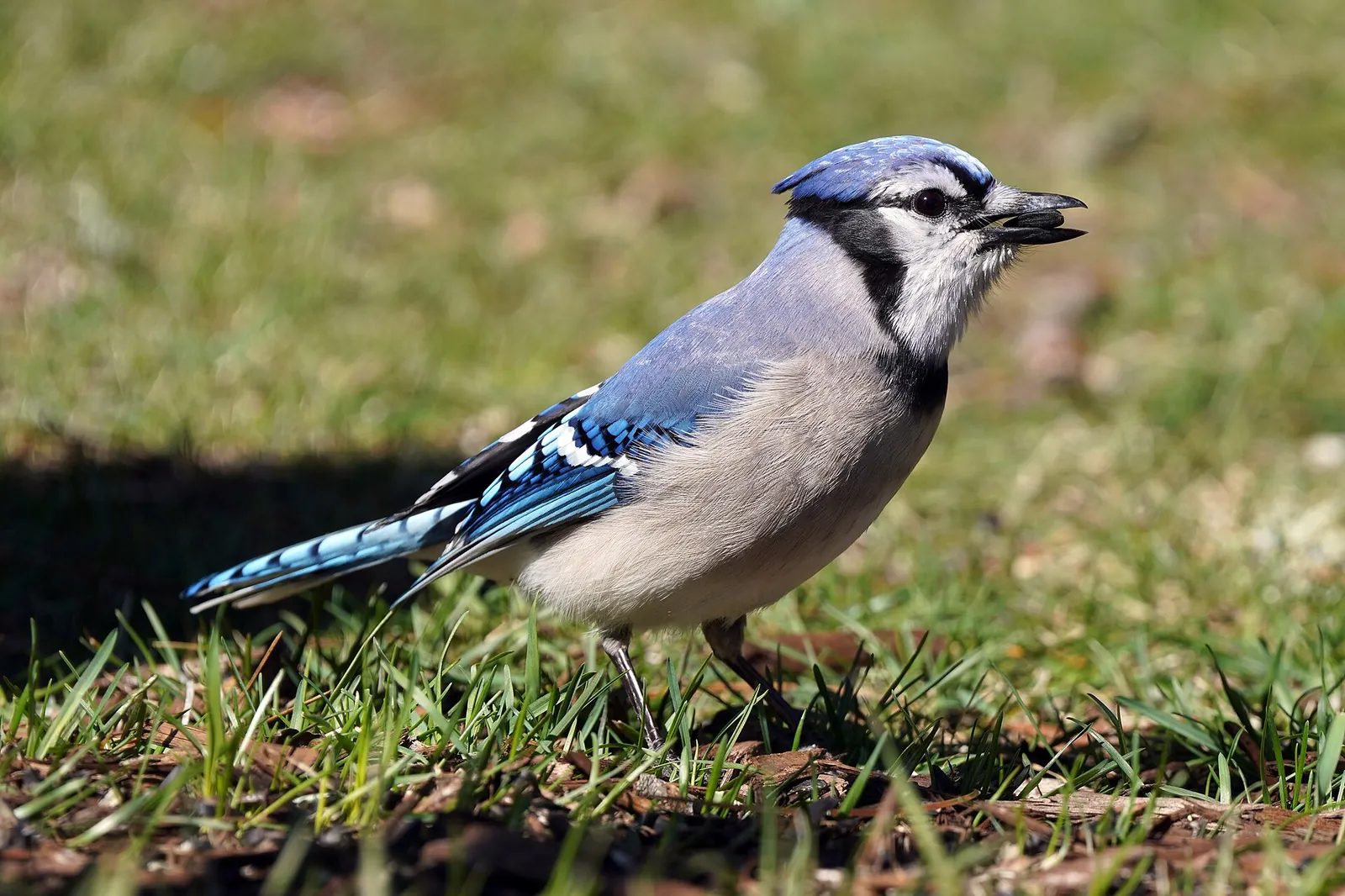
Photo: Courtney Celley / USFWS (public domain)
Connecticut feeder calendar
Backyard birds of Connecticut: who visits your feeder each month
A year at a Connecticut feeder, from the juncos of December to the orioles of May. Winter rankings come from Project FeederWatch. Monthly peaks are drawn from a large set of Connecticut sightings, then checked against well-known seasonal patterns.
Blue jay. Photo: Courtney Celley / USFWS (public domain). Image credits.
Connecticut sits at a useful hinge in New England. The winter feeder list looks like the rest of the Northeast — chickadees, juncos, cardinals, titmice, nuthatches, Downy Woodpeckers — but a few southern species are far more at home here than they are in Maine or Vermont. Red-bellied Woodpeckers, House Finches, and Carolina Wrens are part of an ordinary Connecticut winter in a way they are not farther north.
Two data sets help, and they measure different things. Project FeederWatch reports the share of participating Connecticut feeders that saw each species at least once during the November-to-April 2024–25 season (321 sites). A separate compilation of about 8.9 million Connecticut bird sightings from 2019 to 2024, published by Who’s at My Feeder, is useful for month-to-month timing, including summer birds FeederWatch never counts. FeederWatch tells you who owns the winter hopper. The monthly sightings tell you when a catbird or a hummingbird actually shows up.
The winter leaderboard
Project FeederWatch, 2024–25 season, Connecticut (321 sites). Figures are the percentage of feeder sites that reported the species. The 2025–26 list had not been published when earlier compilations were checked in October 2026.
| Bird | Share of CT feeder sites | Winter role |
|---|---|---|
| Dark-eyed Junco | 93.49% | Winter visitor; often on the ground |
| Northern Cardinal | 93.20% | Year-round; sunflower and safflower |
| Black-capped Chickadee | 92.90% | Year-round hanging-feeder regular |
| Blue Jay | 90.53% | Year-round; peanuts and sunflower |
| White-breasted Nuthatch | 90.53% | Year-round; sunflower, suet, peanuts |
| Tufted Titmouse | 90.53% | Year-round; sunflower, peanuts, suet |
| Downy Woodpecker | 89.64% | Year-round suet regular |
| Red-bellied Woodpecker | 89.05% | Year-round; much more reliable here than in northern New England |
| Mourning Dove | 86.39% | Year-round platform and ground feeder |
| House Finch | 84.62% | Year-round at seed tubes |
| Carolina Wren | 78.40% | Year-round; suet and mealworms in the cold |
| American Goldfinch | 73.08% | Year-round, dull in winter, bright by late spring |
| White-throated Sparrow | 72.78% | Winter visitor; millet and sunflower hearts |
| Hairy Woodpecker | 68.64% | Year-round; suet and peanuts |
| American Robin | 56.80% | Present in winter in smaller numbers; fruit, not seed |
| Eastern Bluebird | 47.63% | Present some winters; mealworms and fruit, not millet |
The junco leads the Connecticut winter list. That is a feeder-season fact, not a claim that juncos outnumber chickadees in July. In Maine, New Hampshire, Vermont, and Massachusetts, the Black-capped Chickadee ranked first in the same FeederWatch season. Connecticut and New York leaned junco. That is one reason a December tray of millet feels essential here.
Month by month
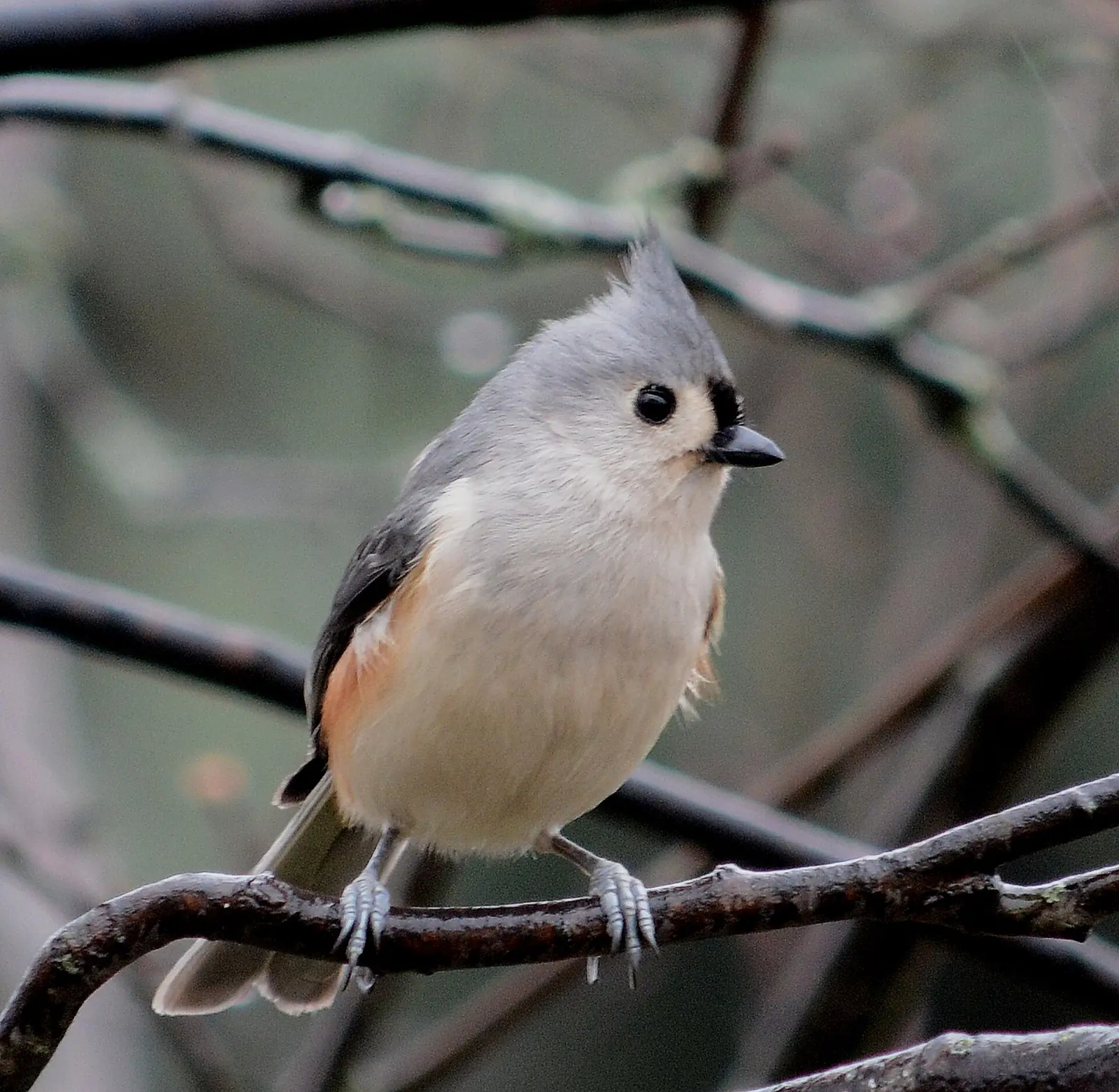
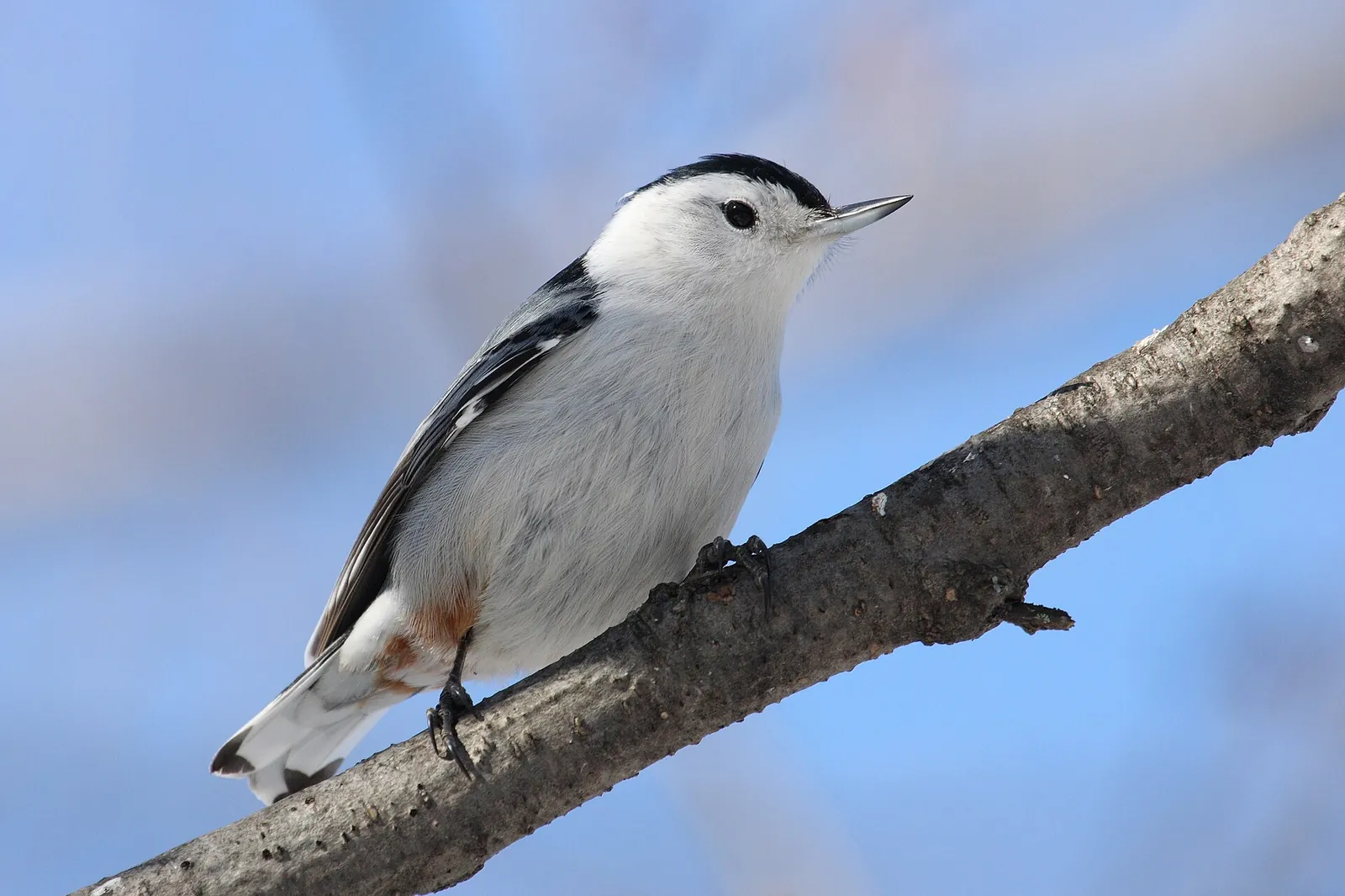
The “most common in” notes below follow the Who’s at My Feeder compilation of Connecticut sightings from 2019 to 2024, which is a guide to timing rather than a formal census. Pair it with FeederWatch in winter and with ordinary field-guide seasonality, and the year makes sense.
January
This is peak feeder dependence. The winter list is in full force: juncos, White-throated Sparrows, cardinals, chickadees, titmice, nuthatches, and woodpeckers. American Tree Sparrows, when they appear, are most often reported in January in the monthly compilation. Keep suet in good shape, offer black-oil sunflower, and put millet on a low tray. A heated bath matters more than a new seed blend. See the winter feeding guide for setup and cleaning.
February
The monthly sightings compilation finds several of the year-round regulars at their strongest in February, including Northern Cardinal, Black-capped Chickadee, Tufted Titmouse, Downy Woodpecker, and White-breasted Nuthatch. Days are still short, and a clean hopper still earns its keep. This is also when people start watching for the first slightly brighter goldfinches and for an early red-winged blackbird on a warm afternoon. The Great Backyard Bird Count usually falls in mid-February; it is a good weekend to write down what you actually have, not what you hope to have.
March
The ground begins to open. Song Sparrows and Mourning Doves are often conspicuous now. Fox Sparrows, an occasional Connecticut feeder bird, are most often noted in March in the monthly compilation as they move north. Juncos and White-throated Sparrows are still here, but the winter flock will thin as the month ends. If you live in bear country in northwestern Connecticut or nearby Massachusetts, this is when Mass Audubon wants feeders taken down in some communities. Check local guidance rather than assuming a statewide rule.
April
The yard changes character. American Robins are at their most visible in the monthly compilation, and early insect-eaters start to move through. Pine Warblers, an occasional suet visitor, are often noted in April. Ruby-throated Hummingbirds begin to appear; the same compilation says sightings start in April and that a nectar feeder should go up by mid-month. Mix one part white sugar to four parts water, and skip the red dye, which is standard guidance from hummingbird conservation groups and is consistent with the monthly guide’s nectar note. Keep the winter seed up until the last juncos leave; do not pack it away on the first warm day.
May
Migration sets the table. Baltimore Orioles are most often reported in May and will come to orange halves, grape jelly, and nectar. Rose-breasted Grosbeaks, an occasional but memorable feeder bird, also peak in May in the compilation and will take black-oil sunflower. Warblers mostly pass through the canopy, not the hopper, though a few species will sample suet or mealworms. If you have a feeder camera, this is when the guest list gets interesting — and when a busy station needs more frequent cleaning, because warm weather spoils seed and jelly faster.
June and July
The feeder becomes a family station. Chipping Sparrows, Indigo Buntings, and Cedar Waxwings (the last usually at fruit, not seed) are more likely now. Young birds show up looking scruffy and unsure. House Finches, goldfinches, cardinals, and chickadees keep coming. Goldfinches nest late, so their breeding season is just getting going. Offer water. Be strict about cleanliness. In bear-active towns, seed feeders should already be down.
August
American Goldfinches are at their most visible in the monthly compilation, males still in breeding yellow, hanging on nyjer tubes. Ruby-throated Hummingbirds also peak in August before they leave. This is a good month to run nectar, nyjer, and sunflower hearts, and to keep the bath full. Suet is more of a risk in the heat; use no-melt recipes or wait until nights cool, following Audubon and Mass Audubon’s caution about rancid fat.
September
The first big departure. Hummingbird sightings fade through September; keep nectar up for about two weeks after the last visit, because late migrants still pass through. Gray Catbirds are most often reported in September in the compilation and will take fruit, jelly, and mealworms. Northern Flickers are also more noticeable as they move. The seed station starts to look like a fall station again: sunflower, a clean tray, and an eye on the first White-throated Sparrows.
October
Winter begins to check in. White-throated Sparrows and Dark-eyed Juncos arrive in numbers as the month progresses; the monthly compilation flags October as a strong month for Yellow-rumped Warblers and for occasional White-crowned Sparrows. Yellow-rumps will sometimes take suet or mealworms on cold mornings. This is the month to inspect poles, baffles, and squirrel damage, and to decide whether a camera feeder is going up before the December shopping rush.
November
Project FeederWatch season opens November 1. Blue Jays are most often reported in November in the monthly compilation, and the winter flock is assembling: juncos, White-throated Sparrows, the hanging-feeder regulars, and both Downy and Red-bellied Woodpeckers. Pine Siskins, when they have a flight year, are most often noted in November in that compilation. In 2026–27, the official Finch Research Network forecast says siskins and some other finches may be in northeastern forests more than at feeders, so do not be disappointed if the nyjer tube stays quiet. Put it up anyway.
December
This is the month the feeder is busiest in the popular sense, and it is also the month camera-feeder searches usually peak. The monthly compilation finds Dark-eyed Juncos, White-throated Sparrows, Red-bellied Woodpeckers, and Carolina Wrens at their strongest now. Offer sunflower, suet, millet, and open water. If you are giving or mounting a camera, read the gift guide and remember that official temperature ratings on some popular cameras sit at 14°F — a number Connecticut sometimes beats on the coldest nights.
A Connecticut pantry that covers the year
- Black-oil sunflower, always.
- Suet from late fall through early spring, and with care in summer.
- White millet on a tray from October through March for juncos and sparrows.
- Nyjer for goldfinches, and for siskins or redpolls if the forecast breaks your way.
- Nectar from mid-April until two weeks after the last August or September hummingbird.
- Oranges and jelly in May for orioles, taken down if they start to spoil or attract unwanted guests.
Details on which seed draws which bird are in the bird seed chart. The point of a monthly calendar is not to chase every rarity. It is to have the right food up when the regulars, and a few seasonal guests, are actually here.
Sources
- Project FeederWatch, Cornell Lab of Ornithology, Top 25 Feeder Birds for 2024–25. Connecticut percentages are the published “percentage of sites visited” figures for that season (321 participating sites).
- Who’s at My Feeder, Backyard birds of Connecticut, updated October 3, 2026, based on 8.9 million Connecticut sightings reported from 2019 to 2024. Used here for monthly timing and seasonal visitor lists.
- Mass Audubon, Bird Feeding Best Practices, including nectar, cleaning, and seasonal bear advice in neighboring Massachusetts.
- Finch Research Network, Winter Finch Forecast 2026–2027.