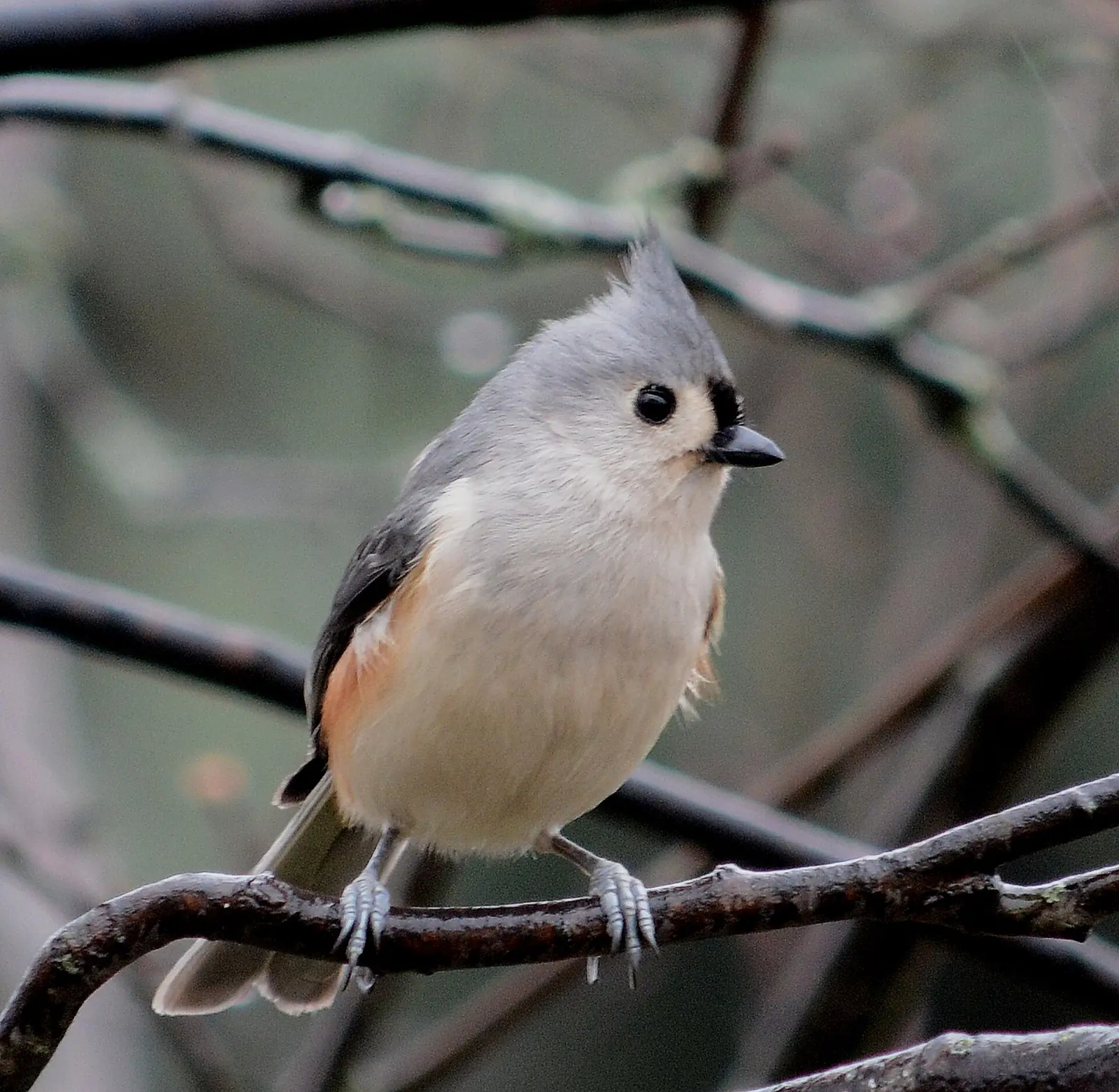
Photo: Jim Hudgins / USFWS, public domain
Monthly report · November 2026
What’s at New England feeders now
The first two weeks of Project FeederWatch are in: chickadees, titmice, jays, nuthatches, and woodpeckers still run the station. Juncos have arrived. Irruptive finches are a woods story more than a feeder story so far. Compiled November 18, 2026, from published counts — not from a private yard log.
Project FeederWatch’s 2026–27 season opened on November 1. On November 16, Stacker published state lists compiled from those counts for November 1–13, ranked by the share of participating sites that reported each species (ties broken by average group size). The New England samples were 316 sites in Massachusetts, 177 in Maine, 122 in Connecticut, 111 in New Hampshire, 68 in Vermont, and 30 in Rhode Island. Those are early-season snapshots, not a full winter, and Rhode Island’s list in particular is a small sample.
The short version: the regulars are already here. Black-capped Chickadees were reported at about 90 percent or more of sites in Maine, New Hampshire, and Vermont, and they still landed in the top five in every New England state. Blue Jays, Tufted Titmice, White-breasted Nuthatches, and Downy Woodpeckers are close behind. Dark-eyed Juncos — the bird that often marks the turn into winter feeding — were already at roughly 60 to 70 percent of sites across the region.
What you probably will not see in a typical yard, at least not yet, is a redpoll invasion. The official Winter Finch Forecast for 2026–27 did not call for one, and none of the six published top-20 lists includes redpolls, Pine Siskins, Evening Grosbeaks, or crossbills. Purple Finches are the exception in the north: they already appear at a notable share of New Hampshire and Maine sites. For live, checklist-level wanderers, watch eBird and the Finch Research Network rather than this monthly digest.
The picture, state by state
Percentages below are the share of FeederWatch sites in that state that reported the species at least once during November 1–13, 2026, as compiled by Stacker from Cornell Lab of Ornithology data. They are not estimates of how many birds live in the state.
Maine — 177 sites
| Rank | Species | Sites | Avg. group |
|---|---|---|---|
| 1 | Black-capped Chickadee | 92.7% | 3.13 |
| 2 | Blue Jay | 88.1% | 2.83 |
| 3 | Tufted Titmouse | 82.5% | 2.39 |
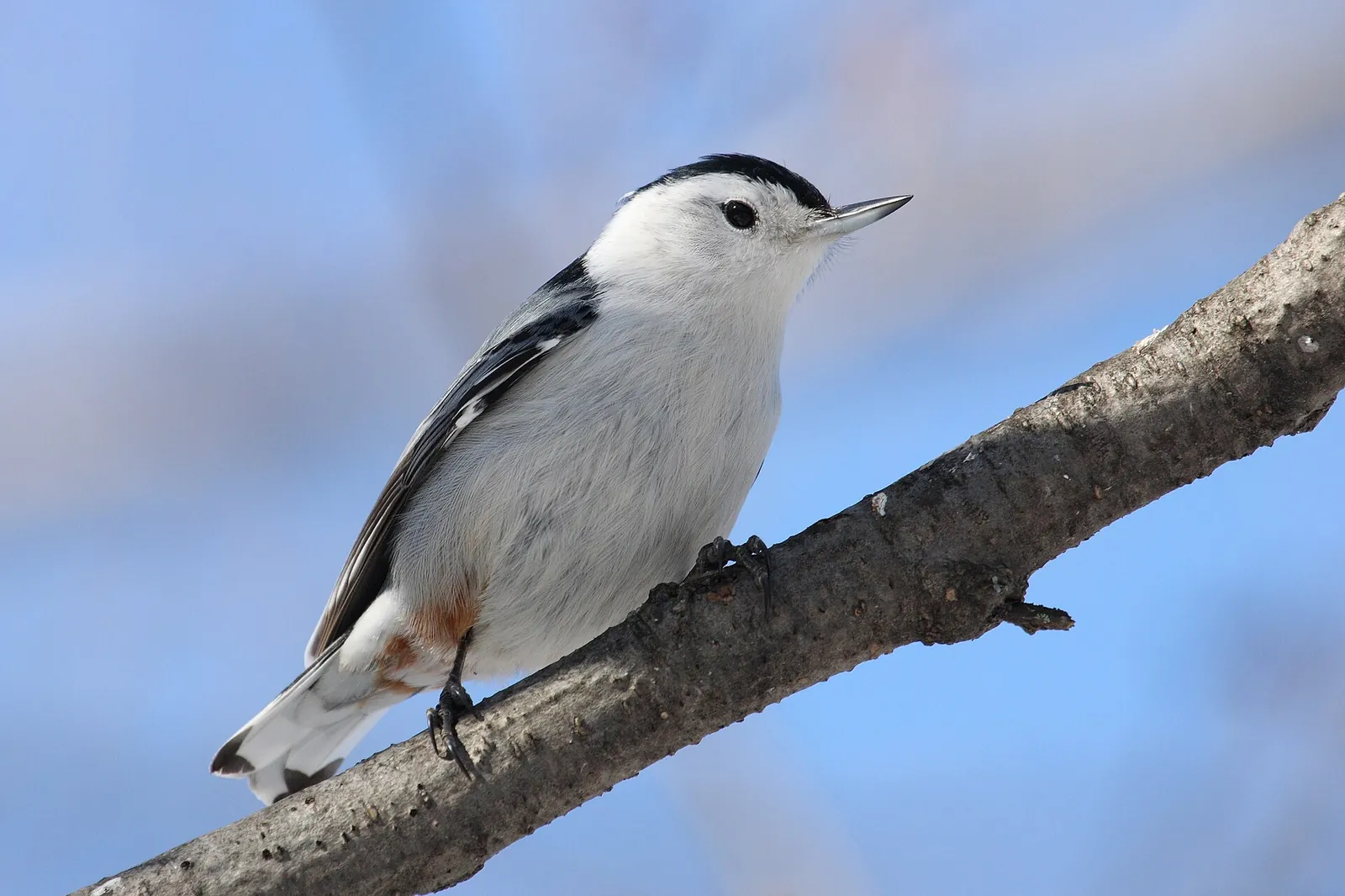
| 4 | White-breasted Nuthatch | 79.7% | 1.38 |
| 5 | American Goldfinch | 75.1% | 4.70 |
| 6 | Downy Woodpecker | 68.9% | 1.33 |
| 7 | Mourning Dove | 68.4% | 3.43 |
| 8 | Northern Cardinal | 68.4% | 1.82 |
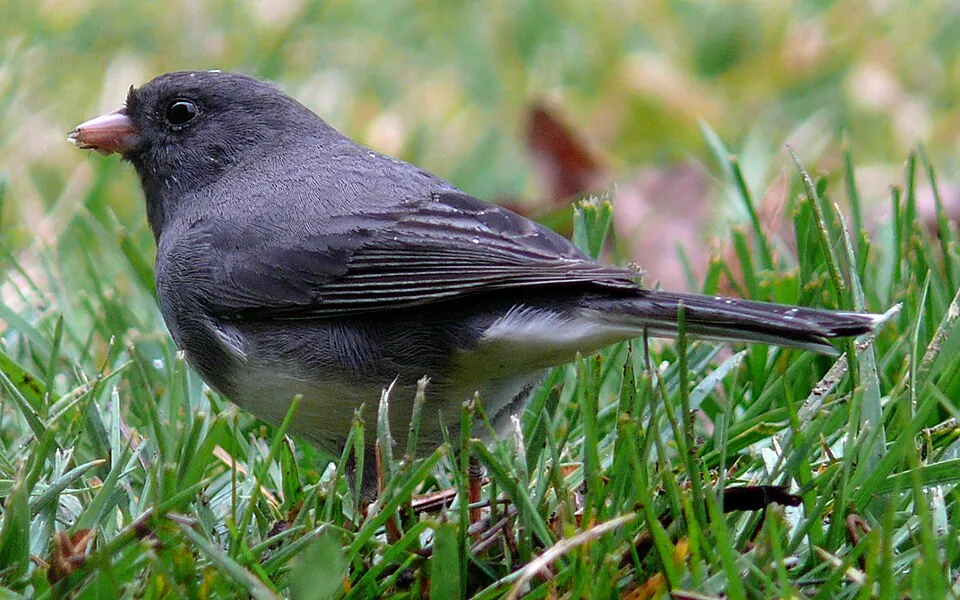
| 9 | Dark-eyed Junco | 61.6% | 2.74 |
| 10 | Hairy Woodpecker | 49.7% | 1.18 |
Maine is the chickadee stronghold in this first window — 92.7 percent of sites, the highest of any state in the national Stacker lists. Goldfinches are also more widespread here than anywhere else in New England (75.1 percent of sites, and the largest average group in the top five, at 4.7). Further down the published list: Red-breasted Nuthatch at 42.9 percent of sites, Purple Finch at 24.3 percent, and Wild Turkey at 20.9 percent, the highest turkey figure among the states Stacker ranked. That nuthatch number is worth sitting with, because last winter Red-breasted Nuthatches irrupted all the way to the Gulf Coast; this year the forecast expected good northeastern cone crops to hold many birds farther north, and Maine’s early counts look like that pattern.
New Hampshire — 111 sites
| Rank | Species | Sites | Avg. group |
|---|---|---|---|
| 1 | Black-capped Chickadee | 90.1% | 2.54 |
| 2 | Tufted Titmouse | 87.4% | 2.31 |
| 3 | Blue Jay | 85.6% | 2.88 |
| 4 | White-breasted Nuthatch | 73.0% | 1.35 |
| 5 | American Goldfinch | 69.4% | 3.44 |
| 6 | Dark-eyed Junco | 69.4% | 3.31 |
| 7 | Downy Woodpecker | 69.4% | 1.31 |
| 8 | Northern Cardinal | 65.8% | 1.77 |
| 9 | Hairy Woodpecker | 50.5% | 1.13 |
| 10 | Red-bellied Woodpecker | 47.7% | 1.11 |
New Hampshire had the highest titmouse rate in the country in this compilation (87.4 percent of sites). It also led the published Purple Finch figures, at 28.8 percent of sites — ahead of Maine’s 24.3 percent and well ahead of Vermont’s 13.2 percent. Purple Finch did not appear in the published top 20 for Massachusetts, Connecticut, or Rhode Island in this window. That does not prove the birds are absent farther south; it only means they were not among the twenty most widely reported species on those lists.
Vermont — 68 sites
| Rank | Species | Sites | Avg. group |
|---|---|---|---|
| 1 | Black-capped Chickadee | 89.7% | 3.19 |
| 2 | Blue Jay | 89.7% | 2.53 |
| 3 | Tufted Titmouse | 77.9% | 2.09 |
| 4 | White-breasted Nuthatch | 77.9% | 1.57 |
| 5 | Downy Woodpecker | 66.2% | 1.22 |
| 6 | Dark-eyed Junco | 64.7% | 3.31 |
| 7 | American Goldfinch | 64.7% | 3.17 |
| 8 | Northern Cardinal | 63.2% | 1.65 |
| 9 | Hairy Woodpecker | 55.9% | 1.25 |
| 10 | Mourning Dove | 48.5% | 4.35 |
Vermont tied chickadees and Blue Jays at 89.7 percent of sites; jays had a slightly smaller average group, so chickadees took the first line. Vermont also led the country in Hairy Woodpecker reports in this compilation, at 55.9 percent of sites, with New Hampshire and Maine close behind. That is a northern New England pattern: Hairy Woodpeckers show up at about half of sites in ME, NH, and VT, but only 36.9 percent in Connecticut, 30.7 percent in Massachusetts, and 20.0 percent in Rhode Island.
Massachusetts — 316 sites
| Rank | Species | Sites | Avg. group |
|---|---|---|---|
| 1 | Black-capped Chickadee | 85.8% | 2.05 |
| 2 | Blue Jay | 83.9% | 2.34 |
| 3 | Tufted Titmouse | 83.2% | 2.34 |
| 4 | Downy Woodpecker | 80.1% | 1.50 |
| 5 | White-breasted Nuthatch | 78.2% | 1.42 |
| 6 | Northern Cardinal | 76.9% | 1.73 |
| 7 | Dark-eyed Junco | 70.3% | 2.95 |
| 8 | Mourning Dove | 69.6% | 3.26 |
| 9 | House Finch | 68.4% | 2.43 |
| 10 | American Goldfinch | 65.5% | 3.28 |
Massachusetts has the largest New England sample, and the list looks like the classic southern-New-England winter station: the chickadee-titmouse-nuthatch-woodpecker core, plus cardinals, juncos, doves, House Finches, and goldfinches. House Finches, which fade as you go north (40.1 percent of Maine sites, 42.3 percent in New Hampshire, 33.8 percent in Vermont), are already at 68.4 percent of Massachusetts sites and 66.4 percent in Connecticut. Red-bellied Woodpeckers sit just outside the top ten, at 54.4 percent.
Connecticut — 122 sites
| Rank | Species | Sites | Avg. group |
|---|---|---|---|
| 1 | Tufted Titmouse | 83.6% | 2.51 |
| 2 | Downy Woodpecker | 79.5% | 1.49 |
| 3 | Blue Jay | 77.9% | 2.10 |
| 4 | White-breasted Nuthatch | 77.0% | 1.44 |
| 5 | Black-capped Chickadee | 73.8% | 1.78 |
| 6 | Dark-eyed Junco | 69.7% | 2.89 |
| 7 | House Finch | 66.4% | 2.59 |
| 8 | Northern Cardinal | 63.1% | 1.62 |
| 9 | Mourning Dove | 61.5% | 3.77 |
| 10 | Red-bellied Woodpecker | 57.4% | 1.12 |
Connecticut is the only New England state in this compilation where the chickadee is not number one. Titmice lead, Downy Woodpeckers sit second, and the chickadee lands fifth, at 73.8 percent of sites — still common, but a step below the 85 to 93 percent figures farther north. Red-bellied Woodpeckers make the top ten here (57.4 percent), and White-throated Sparrows show at 40.2 percent, the highest white-throat figure in the six-state set. A month-by-month Connecticut calendar, based on a full prior FeederWatch season, is in Backyard birds of Connecticut.
Rhode Island — 30 sites
| Rank | Species | Sites | Avg. group |
|---|---|---|---|
| 1 | Blue Jay | 90.0% | 1.89 |
| 2 | Mourning Dove | 86.7% | 2.50 |
| 3 | Tufted Titmouse | 86.7% | 2.40 |
| 4 | Downy Woodpecker | 80.0% | 1.53 |
| 5 | Black-capped Chickadee | 76.7% | 2.01 |
| 6 | White-breasted Nuthatch | 76.7% | 1.37 |
| 7 | Dark-eyed Junco | 70.0% | 2.09 |
| 8 | Northern Cardinal | 66.7% | 1.41 |
| 9 | House Finch | 63.3% | 2.37 |
| 10 | House Sparrow | 53.3% | 6.28 |
Treat Rhode Island’s percentages with extra caution: 30 sites is enough to be included in Stacker’s tables (the cutoff was 10) but it is a thin sample. That said, the state led the country in Blue Jay reports (90.0 percent) and Mourning Dove reports (86.7 percent) in this compilation. Goldfinches, by contrast, were reported at only 36.7 percent of Rhode Island sites, the lowest in New England, versus 75.1 percent in Maine.
What this means at the feeder
The birds in these tables are the reason a simple station still works. Black-oil sunflower covers the chickadees, titmice, nuthatches, woodpeckers, cardinals, jays, and most finches. Suet gives the woodpeckers and the chickadee-nuthatch guild a high-fat option. White millet on a low tray feeds juncos, white-throats, and doves without stuffing millet into a hanging tube that sunflower birds will kick clean. Nyjer remains the finch seed, especially in Maine and New Hampshire, where goldfinches were already widespread. The seed chart and the winter seed buying guide turn that into a shopping list.
House Sparrows and Common Grackles show up mainly in the southern lists (House Sparrows at 57.0 percent of Massachusetts sites and 54.1 percent in Connecticut; grackles at 23.0 percent in Connecticut and 23.3 percent in Rhode Island). They are not a reason to take the feeder down, but they are a reason to avoid cheap filler mixes and to keep millet on a tray instead of in the hopper.
The finches, so far
The official forecast, published by Tyler Hoar for the Finch Research Network on September 27, 2026, said finches would move into the northeastern United States but would likely spend more time in the woods than at feeders, because eastern white pine, northern white cedar, and a fair-to-good spruce crop are plentiful. Early FeederWatch lists do not contradict that. Purple Finches are already being reported at a substantial share of northern New England sites. Red-breasted Nuthatches — not a finch, but an irruptive often discussed alongside them — are common at Maine feeders and much less prominent on the southern top-20 lists. Redpolls, siskins, Evening Grosbeaks, and both crossbills do not appear in these published top 20s.
That is not the same as a zero. FeederWatch site percentages miss birds that are in the pines and hemlocks down the road, and a species can be present without cracking a state’s top 20. If you want the wanderers, take a walk in cone-bearing woods and follow eBird. Our plain-English walkthrough of the official forecast is here.
November is still bear season in much of southern New England
These counts describe yards where people are already feeding. They are not a recommendation to put a feeder up in bear country in mid-November. On September 21, 2026, Connecticut DEEP urged residents to avoid putting out bird feeders, including suet and hummingbird feeders, this fall, noting that a feeder can give a bear in hyperphagia as many calories in less than an hour as a full day of natural foraging. DEEP’s black bear FAQ says that if you do feed birds, the window is December through late March, when most bears are in their dens, and that feeders should come down at the first sign of bear activity. Some municipalities, including Simsbury, have their own ordinances. MassWildlife gives similar advice in parts of Massachusetts: wait until bears are denned, often mid-December into February, and take feeders in if a bear appears. In bear habitat, native plants and water help birds without leaving a bag of seed on a hook.
How to read this, and what comes next
FeederWatch percentages measure how many participating sites reported a species, not abundance in the landscape. A bird that visits one in three yards can still be common along a ridgeline or a coastal thicket. The season runs through April, and these mid-November numbers will shift as true winter arrives, as leftover natural food is eaten down, and as any late finch movements develop. We will update this report when a later window of published counts is available. Until then, the winter feeding guide covers the station itself: seed, suet, water, and hygiene.
Sources
- Project FeederWatch / Cornell Lab of Ornithology data for November 1–13, 2026, as compiled and published by Stacker on November 16, 2026, in state lists for Maine (177 sites), New Hampshire (111), Vermont (68), Massachusetts (316), Connecticut (122), and Rhode Island (30). Ranked by percent of sites visited; ties broken by average group size.
- Finch Research Network, Winter Finch Forecast 2026-2027, by Tyler Hoar, posted September 25 and dated September 27, 2026.
- Connecticut DEEP, “DEEP Urges Residents to Avoid Conflicts with Bears this Fall,” September 21, 2026, and the department’s Frequently Asked Questions About Black Bears.
- Connecticut DEEP, Guide to Winter Bird Feeding, on seasonal feeding and bear activity.
- eBird, recommended by the Finch Research Network for tracking finch wanderings through the fall and winter.