Photo: PookieFugglestein / CC0
The pantry
Bird seed chart: which seed attracts which bird
Black-oil sunflower feeds the widest range of backyard birds. Nyjer is for finches, millet is for the ground crew, and suet is for woodpeckers. This chart follows Cornell Lab feeding studies and standard Audubon advice, with a New England winter bias.
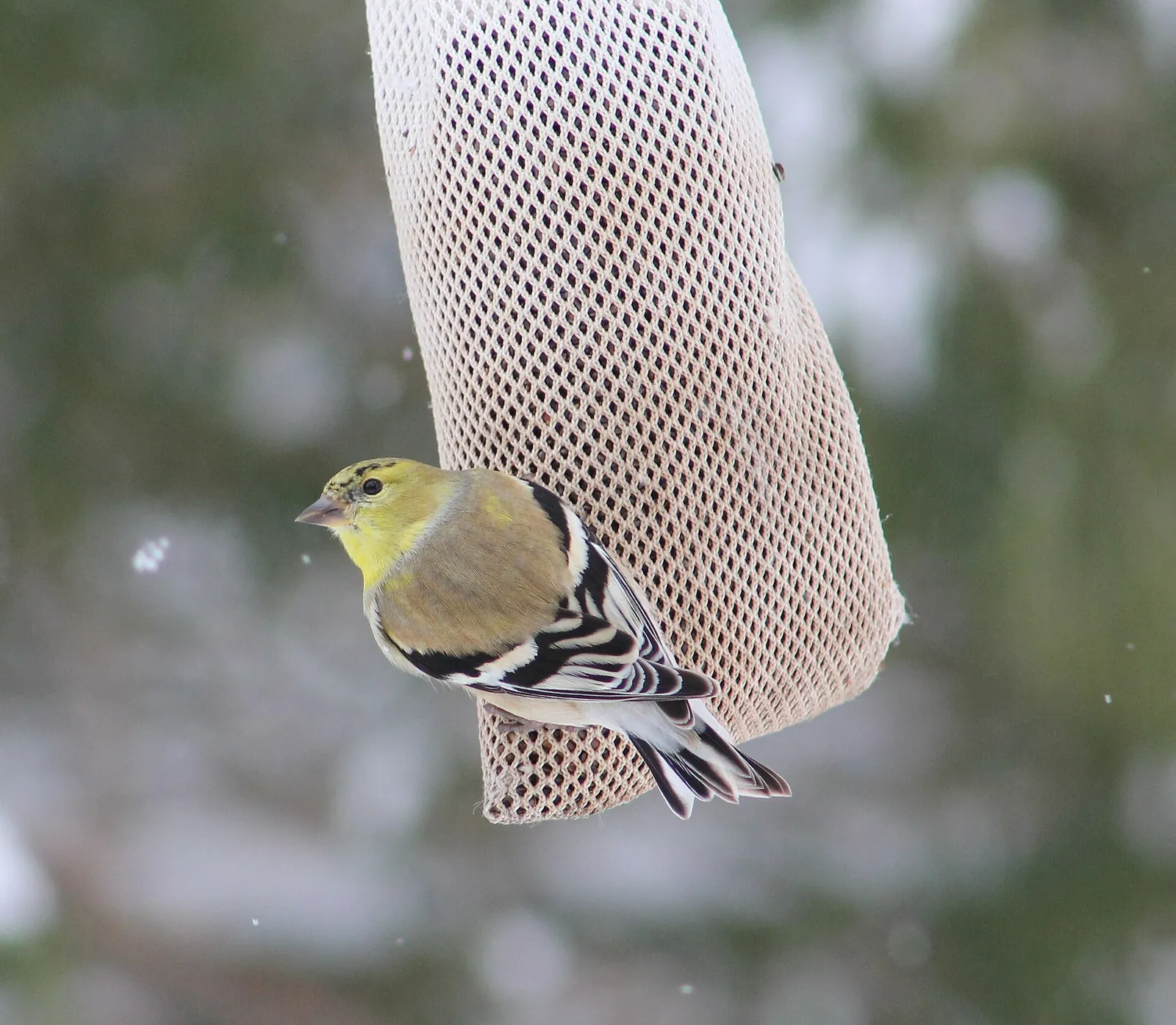
An American goldfinch on a nyjer sock. Photo: PookieFugglestein, CC0. Image credits.
Most seed aisles are louder than they need to be. If you remember one line from the Cornell Lab of Ornithology, remember this: black-oil sunflower seed attracts the greatest number of species. It is high in fat, the shell is thin, and almost every regular feeder bird in New England will eat it. Everything else on this page is a way to invite a particular group, cut waste, or keep squirrels from finishing the bag first.
The table below is based on Cornell Lab seed-preference work, including the Project FeederWatch seed preference test and the Lab’s later feeding guides and classroom posters. A filled circle means the food is readily eaten or preferred by that group. Blank cells mean it is not a reliable draw. Individual birds will break the pattern, and regional habits vary, which is something Cornell itself notes.
The chart
| Food | Chickadees, titmice, nuthatches | Finches | Cardinals and grosbeaks | Sparrows and blackbirds | Jays | Woodpeckers | Doves and pigeons |
|---|---|---|---|---|---|---|---|
| Black-oil sunflower | Yes | Yes | Yes | Yes | Yes | Yes | Yes |
| Shelled sunflower | Yes | Yes | Yes | Yes | Yes | Yes | Yes |
| Striped sunflower | Yes | Yes | Yes | — | Yes | — | — |
| Safflower | Yes | Yes | Yes | — | — | — | — |
| Nyjer (thistle) | — | Yes | — | — | — | — | — |
| White millet | — | Yes | — | Yes | — | — | Yes |
| Cracked corn | — | — | — | Yes | Yes | — | Yes |
| Milo | — | — | — | — | Yes | — | Yes |
| Peanuts | Yes | — | — | — | Yes | Yes | — |
| Suet | Yes | — | — | — | Yes | Yes | Yes |
Adapted from Cornell Lab of Ornithology seed-preference materials, including the Project FeederWatch seed preference test and the Lab’s Seeds and Grains poster. “Yes” means the food is preferred or readily eaten by that group in those studies, not that every individual bird will take it.
Black-oil sunflower, first
If you buy one bag, buy this. Cornell describes black-oil sunflower as high-energy, with a thin shell that small birds can open, and as a favorite of cardinals, chickadees, finches, and sparrows; woodpeckers will take it too. Offer it in a tube or hopper, or on a platform. A tray underneath catches dropped seeds for juncos and doves and keeps the ground a little cleaner.
Striped sunflower seeds are larger and harder. Some larger-billed birds handle them easily; smaller birds often ignore them if black-oil is available. Shelled sunflower (hearts or chips) is the no-mess version and is eaten by almost everyone on the chart, but it mats and spoils quickly when wet, so use a covered feeder and put out less at a time.
Nyjer, millet, and the rest
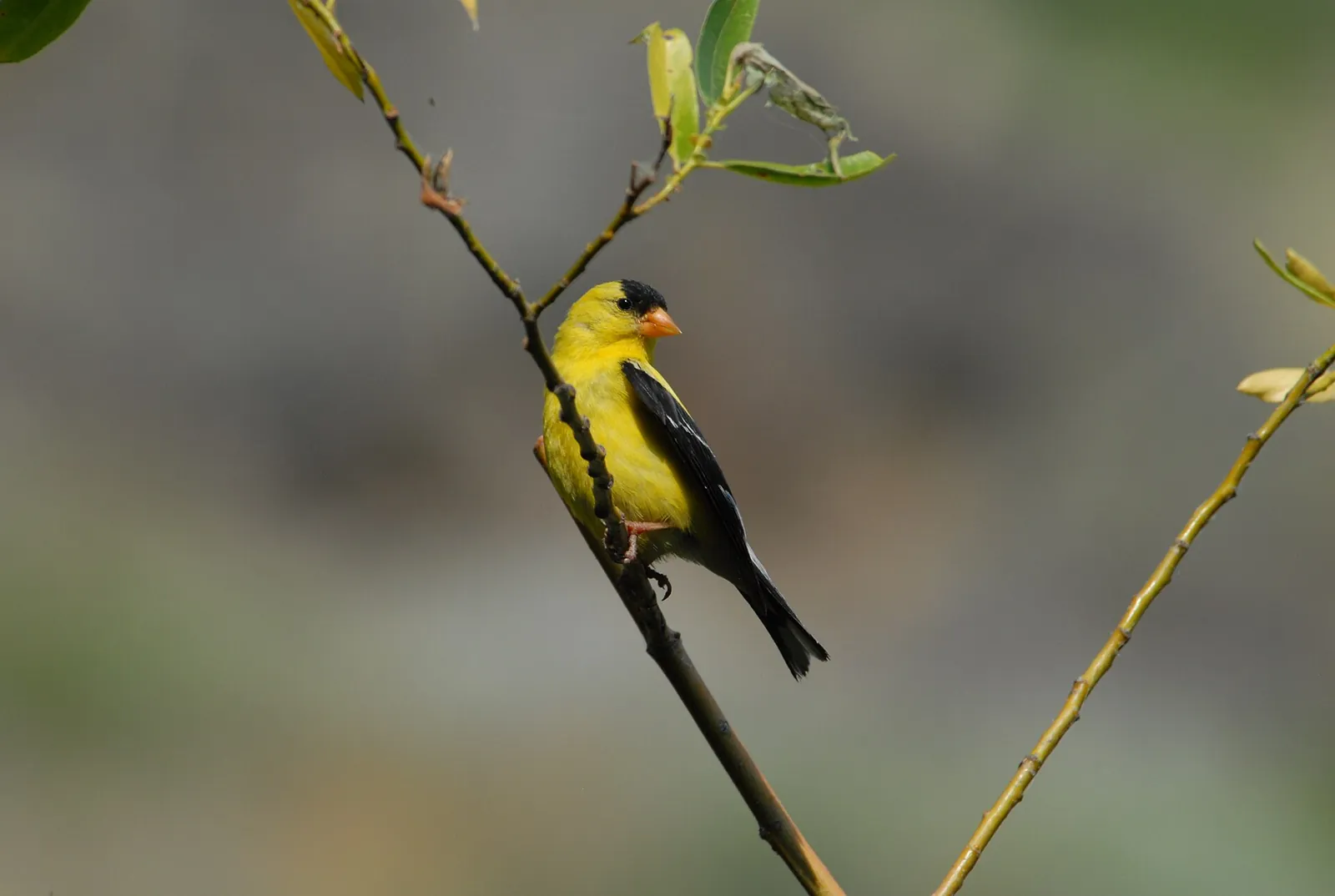
Nyjer is a specialist seed. Cornell notes that it comes from the African plant Guizotia abyssinica, is imported and heat-treated so it should not sprout, and is the seed that reliably draws American Goldfinches, Pine Siskins, and redpolls. It is small and expensive. Feed it alone, in a nyjer tube or a fine mesh sock, or you will watch it pour onto the ground. For a New England winter, a nyjer feeder is how you stay ready for a siskin or redpoll flight without changing the rest of the station. In 2026–27, the official finch forecast does not promise a big redpoll year, but goldfinches will still use the tube.
White proso millet is the ground-feeding seed. Juncos, many sparrows, doves, and some blackbirds prefer it. Cornell has noted that most birds prefer white proso millet over red millet. Scatter a small amount or use a low platform. Mass Audubon says to offer no more than will be eaten in a day so the seed does not rot. This is the seed that makes a Connecticut December tray work for juncos; see the monthly calendar.
Cracked corn is cheaper energy for doves, jays, sparrows, and blackbirds. Whole corn is harder and leans even more toward jays, doves, and game birds. Squirrels consider both a personal gift. Use corn on a platform away from the hanging feeders if you offer it at all.
Milo (sorghum) is the filler to watch for. In Cornell’s table it is readily eaten by jays, doves, and some other birds, but it is widely used in cheap mixes that eastern songbirds sort through and reject. If a bag feels suspiciously heavy with reddish round seeds, you are often paying for milo. Audubon’s winter-foods list makes the same point about bad mixed seed.
Safflower looks like a white, slightly bitter sunflower seed. Cardinals and some other thick-billed birds will eat it. Squirrels and House Sparrows sometimes like it less, which is the usual reason people switch, though Cornell’s experience is that most birds still prefer sunflower when both are offered. Keep safflower dry; it turns soggy on the ground.
Peanuts are high-protein food for jays, woodpeckers, nuthatches, chickadees, and titmice. Audubon recommends unsalteds, dry-roasted peanuts, not party nuts. A mesh peanut feeder or a tray of peanut pieces works. Whole in-shell peanuts favor jays and the occasional lucky nuthatch.
Suet is beef fat, sometimes mixed with seed or fruit, and it is the reliable way to bring woodpeckers, wrens, chickadees, nuthatches, and titmice in close. Offer it in a cage. Audubon and Mass Audubon both say to be careful in hot weather: suet can go rancid, and dripping fat can damage feather waterproofing. In a New England winter it is one of the most useful foods you can hang.
Other worthwhile foods sit just off the chart. Mealworms will draw bluebirds, wrens, and a surprising number of other species. Fruit — orange halves, chopped apples, soaked raisins — is the May oriole trick and a winter robin or bluebird option. Nectar for Ruby-throated Hummingbirds is one part white sugar to four parts water, with no red dye.
How to offer it without wasting it
Audubon’s short version is the right one: put different seeds in different feeders. A sunflower specialist will toss millet and corn on the ground to reach the sunflower. That can feed juncos, or it can just grow a sour mat under the pole. A hanging tube of black-oil sunflower, a nyjer tube, a suet cage, and a low millet tray will cover nearly every Connecticut regular without a boutique blend.
If you want a homemade mix, Cornell has published a simple formula: one 25-pound bag of black-oil sunflower, one 10-pound bag of white proso millet, and one 10-pound bag of cracked corn, stirred and stored in a tight, waterproof container. Use a metal can if rodents are a problem. That mix is for platform or hopper feeding, not for a nyjer tube.
Store seed dry and cool. Wet tubes grow mold. Mass Audubon recommends cleaning feeders about every two weeks with one part bleach to nine parts water, then rinsing and drying thoroughly. If you see sick birds, especially House Finches with swollen or crusty eyes, take the station down for a couple of weeks and clean the ground as well as the ports.
Ready to buy a bag?
The chart tells you which seed to offer. The winter bird-seed buying guide names currently sold bags and cakes — black-oil sunflower, no-mess blends, nyjer, millet, hot-pepper mixes, and suet — with affiliate placeholders until those programs are live.
A starter shopping list
- Black-oil sunflower, in a tube or hopper, for almost everyone.
- Suet, in a cage, from late fall through early spring.
- White proso millet, on a tray, from fall through early spring for juncos and sparrows.
- Nyjer, in its own feeder, for goldfinches and irruptive finches.
- Peanuts, if you want to feature jays and woodpeckers.
That list will not empty a specialty store, and it does not require a camera. If you do add a camera later, the birds in the frame will be the birds this chart already invited. Prices for seed move with the season; buy from a source that turns stock over, because a bargain bag that has sat in a hot warehouse is not a bargain.
Sources
- Cornell Lab of Ornithology, seed preference materials, including the Project FeederWatch Seed Preference Test summary in BirdNotes: Winter Bird Feeding and the Lab’s Seeds and Grains poster.
- Project FeederWatch, Feeding Birds, on black-oil sunflower, nyjer, safflower, millet, milo, peanuts, and suet.
- National Audubon Society, 11 Tips for Feeding Backyard Birds and Top 10 Foods for Winter Bird Feeding.
- Mass Audubon, Bird Feeding Best Practices.